Choosing Smarter Tree Work: A Homeowner’s Practical Field Guide
Start by scoping your property with a clear objective: hazard reduction, canopy health, or site preparation. Define which trees matter most to your goals, then verify constraints like lot lines, utilities, and access. Mapping drip lines, structures, and traffic paths helps align expectations with what’s feasible. A simple sketch with priorities prevents scope creep, especially when multiple services like Tree Trimming and Brush Removal could overlap.
Meanwhile, assess seasonality and timing against your region’s patterns. Dormant months can minimize stress on certain species, while dry periods often improve access for equipment. However, wildfire-prone zones may push you to act before wind events escalate risk. Build in weather buffers so crews avoid saturated soils and avoid rutting. The right window safeguards root zones and reduces collateral impact to lawns and garden beds.
Beyond that, define a phased workflow that separates urgent hazards from routine care. Emergency Tree Removal addresses immediate threats, while follow-up trimming and deadwood reduction sustain structure. In practice, phasing also spreads costs and keeps traffic disruptions shorter. Stage chipper placement, log laydown, and haul routes to keep driveways open when possible. Document any preexisting conditions with photos for smooth wrap-up conversations.
Often, a health-first lens pays off before committing to removal. Inspect for target defects like co-dominant unions, basal decay, and canopy dieback. Then validate what interventions can extend life: crown cleaning, structural pruning, or selective reduction. If removal is warranted, plan stump depth, access lanes, and protection for hardscapes. Stump Grinding should include chips handling, backfill approach, and surface restoration to avoid future settling.
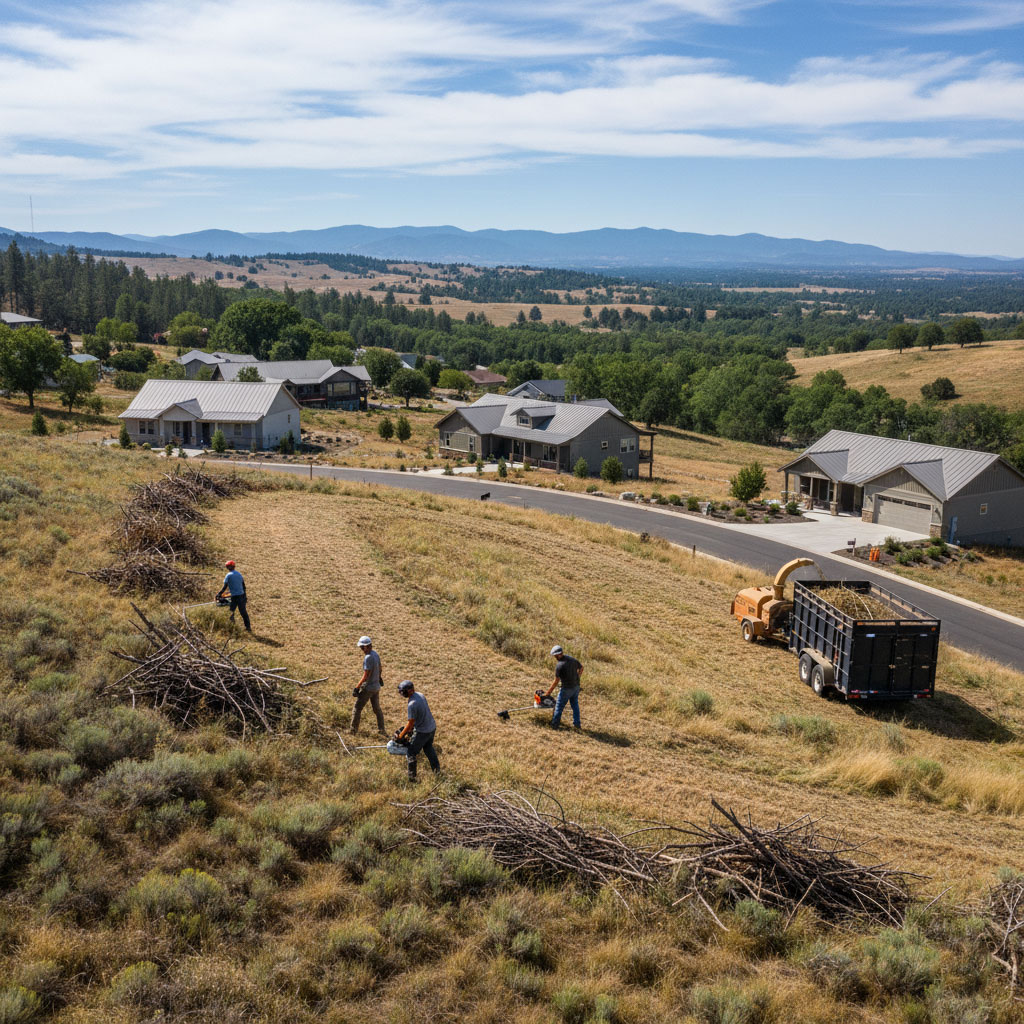
Then, think ahead about vegetation management around structures and routes. Defensible Space is not a single pass; it’s a maintenance rhythm. Masticating and Forestry Mulching can quickly knock down ladder fuels, yet follow-up hand work refines edges near fences, patios, and play areas. Calibrate equipment choice to terrain and proximity to utilities. Light-touch methods near foundations prevent root and siding conflicts.
Additionally, land planning decisions influence water, shade, and long-term maintenance. Land Clearing for new use should preserve anchor trees with strong form and species resilience. Sequence clearing away from saved root zones to minimize compaction. Buffer trunks with protective fencing and keep stockpiles outside critical root areas. When clearing opens sun exposure, anticipate irrigation changes and mulch needs to help remaining trees adapt.
Next, align vendor fit with the complexity of your site. Validate insurance and certifications, and ask how they stage rigging, traffic control, and cleanup. For tight spaces, inquire about low-impact gear and climb-based removals. If you need Emergency Tree Service, confirm 24-hour dispatch protocols and debris handling. A clear communication plan—point of contact, daily check-ins, and variations—reduces misunderstandings and rework.
Afterward, refine expectations for debris disposition. Chips can be repurposed as mulch away from foundations, while logs may be bucked for on-site use or hauled off. If you prefer a tidy finish, specify rake-out standards and final pass timing. Validate that soil contact points are remediated with topsoil where needed. A small investment in surface repair prevents puddling, weeds, and trip hazards.
Finally, set a maintenance cadence aligned to growth rates and exposure. Windward edges might need shorter intervals between trims than sheltered interiors. Tree Removal is not the only risk strategy; structural pruning and selective reductions often deliver stability without over-thinning. Reassess annually after storms and construction changes. Document actions and observations so the next visit can target fine-tuning rather than starting from scratch.
Ultimately, a thoughtful plan blends safety, health, and site goals. Calibrate frequency and intensity to what your landscape can sustain, and keep an eye on how shade patterns shift as work progresses. Validating assumptions with a pre-job walkthrough and a post-job review closes the loop. With a steady rhythm of care, your trees will serve as assets rather than liabilities, season after season.